

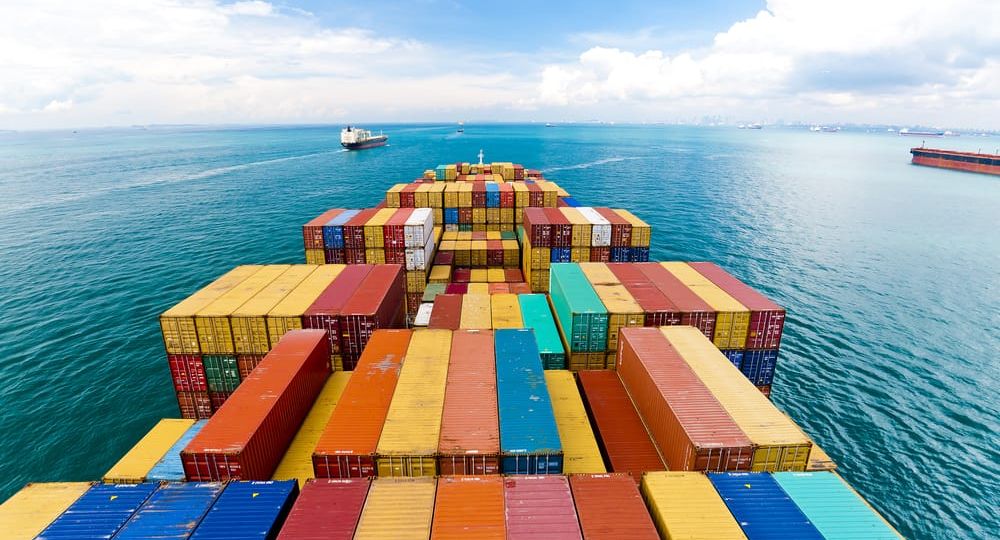
It was a fascinating moment back in 2013 to consider the linked fortunes of Latin America and of Asia. The leaders of the world’s two most power- ful nations, the United States and China, each visited Latin America and the Caribbean within days of each other. Chinese President Xi Jinping’s visit to Mexico, Costa Rica, and Trinidad and Tobago showed the strategic importance of the region to the resource-hungry Asian giant, which was eager to build strong trade, investment and…
Resources
This article is written by: Ousmene Mandeng. The IMF is the only formal arrangement for multilateral economic policy cooperation, but representation at the IMF, expressed through so-called quota shares, is no longer aligned with economic realities. This reduces countries’ incentives to engage constructively with the existing system. Any debate about change ought to see China’s quota share increase significantly. A necessary condition thereof is a reduction in the shares of the European Union countries. International trade is stagnating and there…

PBEC’s QI Group recently attended the World Economic Forum (WEF)’s Annual Meeting of the New Champions 2024 in Dalian, China. This prestigious event gathered 1,600 leaders from over 80 countries to address pressing global challenges. As a long-standing WEF partner since 2010, we are committed to contributing to positive global progress. Representing QI Group were Chief Communications Officer Ramya Chandrasekaran, Chief Information Officer Ivan Woo, Chief Financial Officer YK Lee, and Senior Financial Controller Catherine Wong. This year’s theme, “Next…

PBEC’s KPMG publishes the latest HKEX requirements for public listed corporations in a nice and easy graphic for us with time-line for implementation here. See attached: https://assets.kpmg.com/content/dam/kpmg/cn/pdf/en/2023/05/new-climate-disclosure-requirements-for-hong-kong-listed-companies.pdf
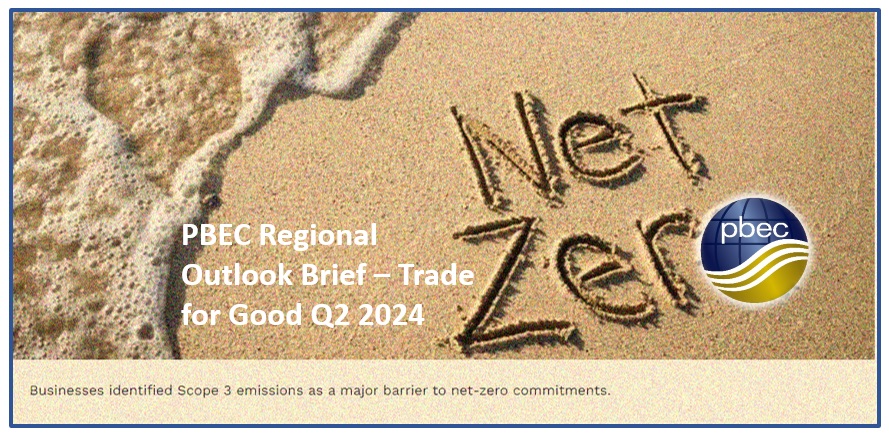
Despite the uncertainty about what lies ahead for global trade, there are still reasons for optimism about its resilience and its enduring role as a catalyst for positive change, and these are encapsulated in the current trends that are shaping the landscape. As 2024 Q2 draws to a close, economies in Asia Pacific are facing what is projected to be a modest slowdown to approximately between 3.5% to 4.2% on average according to the IMF. But this paints over some…
This report consolidates the preliminary advice of the Circular Economy Ministerial Advisory Group (the Advisory Group) to the Australian Government at the half-way point of their tenure. The recommendations they have identified and discussed with members of Government to-date are organised into the six topics that the Advisory Group considered in 2023 (National policy setting, Targets and indicator, Economics, Net zero, Design and consumption of products, Built environment). Link: https://www.dcceew.gov.au/sites/default/files/documents/circular-economy-ministerial-advisory-group-interim-report.pdf
Our dear colleague Ben Simpfendorfer immediate past PBEC BoD and his colleague at Oliver Wyman UAE Adel Alfalasi have published a new New Silk Road Report looking at the Asia-Middle East growth corridor. 🔹 6 Themes each with their own scenario pathways: Energy Transition, Mobility & Transport, Financial Services, Supply Chain, Emerging Payments, Digital Disruption 🔹 24 Priority Opportunities driven by 18 long-term trends: China’s clean tech exports, energy transition financing platforms, China+1 supply chain relocation, a digital gaming boom,…
Southeast Asia has become an intriguing region for private capital investment in recent years. Many countries in the region sport fast-growing and diverse economies that provide a range of sectors for investment. Investment in Southeast Asia has leaned heavily toward VC due to nascent tech ecosystems, robust demographics, and a large talent pool driving the future of economies within the region. 2022 set the high-water mark of private capital deal value within Southeast Asia when $34.1 billion was invested across…
Exploring the transformational opportunities and challenges of new sovereign monies. Central Bank Digital Currencies (CBDCs) and stablecoins have the potential to help digitize entire economies and represent a powerful force for unlocking the Internet of Value. Today, 130 countries, representing 98% of global GDP,1 are pursuing CBDC projects. Some, including the United States and South Africa, have entered exploratory phases. Many projects throughout the European Union are in development, while China has reached a pilot phase and is nearing full…
Click image below to read the report